Druckversion

Deutsche Version

An Encyclopedia of St. Martin of Tours (+ 08.11.397)

Advent

Since the end of the 4th century, Christian communities in Gaul have been preparing their new members for baptism in a preparation time in which they fasted. This time started with St. Martin´s day at the 11th of November and lasted 40 days. Therefore, it was called „Quadragesima Sancti Martini” which means in Latin „the forty days of St. Martin”. At St. Martin`s eve, people ate and drank very well for a last time before they started to fast. This fasting time was the forerunner of the today known advent.

Chlamys

Chlamys is the original name of St. Martin`s roman military cape. It must have been white, because the members of the cesarian guard wore white coats. Nevertheless, today, the cape is often shown as red and is called „cappa”, the Latin word for cape.

Düppekuchen (dialect)

This food is called „Topfkuchen” in standard German and means „cake out of a pot”. it is made of potatoes and very tasteful. Potatoes were a poor man´s meal in earlier times, too.

11th of November

In Europe, the 11/11 is the official beginning of the carnival season. 11 is the number of sin and the number of fools. In biblical terms, it symbolizes the trespasses against the ten commandments. It is a „Schnapszahl”, a number in which all digits are the same. However, the beginning of the carnival season at the 11th of November is a „discovery” of the 19th century and has nothing to do with St. Martin.

Faire la Saint Martin (french)

also „martiner”, means in France „eating and drinking well”.

Feuersprung (fire jump)

The German word describes young people jumping over a fire at certain days, e.g. St. Martin´s day or St. John´s day. This jump has a symbolic meaning. It shall strengthen the power of light, bring good luck for the jumper and bring blessing to the fields. In cities where the fire jump was forbidden (e.g. in Münster, 1705 A.D.), people jumped over a candle. Maybe the „king´s jump” of Dutch children has the same roots.

Funkentag (day of sparks)

Another name of St. Martin´s eve, the 10th of November.

Gebildebrot (formed bread)

At different religious feasts, people bake cookies or bread in different forms. The pastries show people, Saints, animals or symbols. They symbolize wishes, feasts or sacrifices. (see Lutherbrötchen, Martinsbrezel, Martinshörnchen and Weckmann)

Gripschen (dialect; similar in English: to grip)

The word denotes a symbolical children´s begging at St. Martin´s day. The 11th of November was a traditional thanksgiving day in the Middle Ages, and the Christians took over the old custom, because St. Martin was the symbol of sharing and benediction.

Heischebrauch (dialect; „the custom of begging”)

At different days, children are allowed to go „begging” from door to door for symbolical reasons. They often sing or dance and receive pennies, cookies, nuts or fruit. The custom is known all over the world.

Heischegang (dialect; „the walk of begging”)

Denotes the single walk of children´s begging, described in „Heischebrauch”.

Heischelieder (dialect; „the songs of begging”)

Describes the songs children sing when they go begging.

Kapelle (chapel)

The cape of the roman officer Martin was called cappa. It was preserved in a church in Paris which was therefore called „cappella”. The priest of this church was called „cappellanus”, the English „chaplain”. Today, Kapelle means a small church without its own priest or parish. It means also the musicians of the church. It is even another word for a combo, an orchestra or a band.

Lutherbrötchen (bread of Luther)

The name for „Martinshörnchen” in Protestant regions.

top

mal de Saint Martin (french)

This is a slightly ironic description for the headache and illness at the morning after an evening of eating and -first and foremost- drinking alcohol.

Mantelteilung (the sharing of the cape)

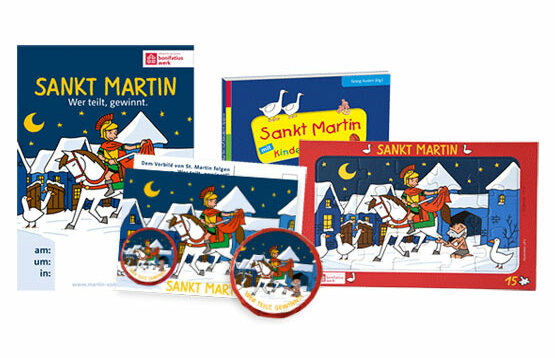
The legend of St. Martin tells that he shared his officer´s cape with a beggar and Christ himself appreciated this gentleness. Martin, who wasn´t baptized yet, acted as Christ told the people in the Gospels of Marc 12, 31, Matthew 22, 39, and Matthew 25, 40.

Martin

The Roman name „Martinus” is deducted from the Roman god of war called Mars. It can be translated as „belonging to Mars” or „warrior”. Since the life of St. Martin of Tours, the name has also been a Christian name. In German dialects, there are different names of families deducted from St. Martin, e.g. „Merten” or „Mertens”.

Martina

She was a martyr and a Saint of early Christian times and has been worshipped in Rome since the 7th century. Thus, her name is not deducted from St. Martin´s.

martiner (french)

see „faire la Saint Martin” and „Martinsminne”.

Martini

This is another name for St. Martin´s day, deducted from the Latin „dies Sancti Martini”. In the gallican liturgy, Martini was the last festival before the six weeks´ time of fasting (fasting of Epiphany, Advent, Quadragesima Sancti Martini) started. The festival of Martini began - as all religious festivals do - at the evening before at the first vespers in which the candles in the church were lightened; the so-called lucernarium.

Martinigerte (dialect: Martinsgerte, Märtensgerte; meaning: „St. Martin´s switch”)

At St. Martin´s day, the herdsmen gave the farmers a branch of a birch tree. They left a few leafs at the top and added branches of oak and juniper. The switch was used next spring for the cattledrove. It was benedicted at Epiphany (the 6th of January) and should bless the cattle at the drove. (see Martinisegen)

Martinikirchweih (St. Martin´s fair)

It´s a fair at St. Martin´s day , held in the parish on the anniversary of the consecration of the church to the name of St. Martin.

top

Martinimarkt (St. Martin´s market)

Market at St. Martin´s fair. In the countryside, people bought necessarities for the house and the farm and also „bought” hands and servants for the farm. The farm hands offered their workforce to the farmers. Today, St. Martin´s markets have nearly vanished due to the mobility of the rural population.

Martinisegen (St. Martin´s blessing)

The Austrian Martinisegen is a herdsman´s riddle at the cattle-drove at the beginning of winter. The homecoming cattledrover gave back the Martinigerte to his master; the branch was preserved during the winter and used again in spring at the new cattle-drove. (see Martinigerte)

Martin Luther

The Reformer Martin Luther (1483 - 1546) came off from the worshipping of hallows in his doctrine. In Protestant churches, no hallow is worshipped anymore. Nevertheless, the name Martin is very common in Protestant families. It is surely not the Saint who is „patron” of all the Protestant Martins, but the historic Martin Luther. Besides, Luther himself must have known the St. Martin´s customs of his time, because he was scholar in a Christian young people´s choir, a so-called Kurrende.

Martinsabend (St. Martin´s eve, Martinmas)

It begins after sunset at the 10th of November, at the first vespers with a ceremonial procession with St. Martin on horseback and the beggar (performed by dressed up people from the parish). People sing St. Martin´s songs and kids carry St. Martin´s lamps or torches. After the procession, children are allowed to go for the symbolical begging, the Gripschen.

Martinsbrauchtum (St. Martin´s custom)

Today, there are very different kinds of St. Martin´s customs to be discovered all over the „germanic” Europe. In regions of the Rheinland, customs of St. Martin´s day are rather similar and very closely related to the church. In Northwest Germany, one can find customs with masks, in Middle Germany processions and in Schlesien St. Martin´s pastries. In Protestant regions, the customs are related to Martin Luther, e.g. the processions of „Martin´s lights” in Erfurt. In other regions (e.g. the Alps or Württemberg), there is almost no relation to the hallow anymore. In some regions, the customs of St. Martin joined the customs of the thanksgiving festival. In playful contests for the Martinmas goose, a rooster or a goose was slaughtered and pigs were agitated against each other. (in Würzburg)

top

Martinsbrezel (St. Martin´s pretzel)

The pretzel (from Latin precedella?) is an old festival-pastry. At the beginning of the century, the Brezelbäck (the pretzel-baker) offered his pastries on a long stick. The history of the pretzel is rather unknown and may begin even in times before Christianity spread over Europe. Maybe originally, it was a burial object. The stange name „Brezel” could also be deducted from the Latin brachia or bracciola, which means „embracing arms”.

Martinsbruderschaft (Brotherhood of St. Martin)

Beneath all the different brotherhoods of the Middle Ages, the brotherhood of St. Martin used to preserve especially the memory of St. Martin.

Martinsfeuer (St. Martin´s fire)

Today, the St. Martin´s fires are mostly removed by the processions. People can understand the symbolical meaning of the fire - it brings light in the darkness, as St. Martin brought the mercy of God in the dark of this world. The fire may have its roots in the old Germanic festivals of winter solstice and thanksgiving. It is a bonfire and a cleaning fire in which the past year is burned. It is a sign that time flies and will never come back.

Martinsfischer (St. Martin´s fisherman)

The colloquial name for the kingfisher bird. The legend tells that St. Martin gave bright white feathers to an ugly black bird, and the kingfisher was born.

Martinsgans (Martinmas goose)

In Europe today, the goose is often called stupid („stupid goose”) which is totally wrong. In Roman times, the goose was compaign and friend of the god of war, Mars. In Germanic myths, it was a symbol for the god Wotan and the personification of the „vegetation ghost”. Those who solemnly ate a goose were able to share the power of this vegetation ghost. An old book from Cologne tells: „Martinmas was the evening for a good meal. This has been usual in Cologne since the oldest times. The main course was the Martinmas goose, roasted and filled with apples, raisins and chestnuts.”

Martinsgeigen (dialect, „St. Martin´s violins”)

In Southern Germany, this was the name of big white breads which were benedicted in church and given to the poor at St. Martin´s day.

top

Martinshorn

This is the German name of the siren of emergency vehicles. It has nothing to do with St. Martin, but with the name of the producer.

Martinshörnchen (St. Martin´s croissants)

The older research says: The legend tells about St. Martin wearing Wotan´s cape as a soldier. People eat Martinshörnchen made of short pastry or yeast pastry, because the crescent-shaped cookies are similar to the horseshoe of Wotan´s horse. However, this theory can be doubted. Another legend tells that croissants were made for the first time during the turkish siege of Vienna. Later, the princess of Habsburg, Marie Antoinette who married the french king Ludwig XVI brought them to France. This pastries taste best when given as a present to friends! In some Protestant regions, the Martinshörnchen are called „Lutherbrötchen”, which means „bread of Martin Luther”.

Martinsküchlein (St. Martin´s cookies)

Lard cookies, given as a present from the lord to the servants (or the adults to the kids) at St. Martin´s day; as the so called Martinslaible, a plaited bun.

Martinslampen (St. Martin`s lamps)

The St. Martin´s processions with lamps often remove the St. Martin´s fires; and they symbolize the same: They bring light into the dark. In the countryside, Martinslampen are often made of pumpkins or turnips (like the Halloween-pumpkins in Anglosaxon countries). They are easy to make and can be replaced easily, too. The processions have their roots in the lucernarium, the liturgical lighting of the candles in the first vespers.

Martinslieder (St. Martin´s songs)

St. Martin´s songs preserve the memory of St. Martin since the 14th century. Most of the new songs have been created at the last turn of the century, when the old customs had a revival. The old songs have their origins in the goliardic poetry of the Middle Ages. Some songs from the Altmark may be 750 years old. Mostly, the songs come from the Rheinland and the Netherlands.

Martinsmann (St. Martin´s man)

The colloquial expression for the man dressed up as St. Martin, but also an ironic expression for a man who squandered all his money.

Martinsmännchen (dialect: Martensmännchen; means „St. Martin´s little man”)

In the Sauerland, a little Martinsmännchen, a dressed up boy or girl appears instead of St. Martin on horseback. He gives nuts or apples to the kids who know how to pray. This custom may be the forerunner of the St. Martin´s processions. In the year 1800, Martinsmännchen in Cologne went from door to door with all the young people of the parish, doing the symbolical begging called Heischen or Gripschen.

top

Martinsmahl (St. Martin´s meal)

This is a solemn meeting of the elders of the parish with a ceremonial meal at Martinmas. It can also be a meal of the familiy or all people living in the same house.

Martinsminne (dialect)

To drink the „Martinsminne” means the drinking of the new wine of the year at St. Martin´s eve. This custom (especially in Cologne) has its origins in an old legend. The swedish king Olaf Tryggwason had a dream vision in which St. Martin told him not to worship the old Germanic gods Thor and Odin anymore, but to drink the Martinsminne instead of the Odinsminne. In Germany today, the relation between thanksgiving and St. Martin covers up the tracks of the origin of this custom.

Martinsschiffchen (St. Martin´s little ship)

This is a cookie made of short pastry and filled with raisins. It looks like a little ship and is given to the school teacher by the kids at St. Martin´s day. In times, when school money was payed in kind, this was an appreciation of the teacher´s work.

Martinsschweine (St. Martin´s pigs)

In Würzburg, pigs were agitated against each other at St. Martin´s day. In other regions, the goose was the animal of those „contests”.

Martinssingen (St. Martin´s singing)

These are the songs the kids are singing when they go for the symbolical begging (Heischen, Gripschen). In the countryside, these songs have their roots in herdsmen´s sayings and the giving of the Martinigerte. I towns, kids collected wood for the St. Martin´s fire and sometimes received some additional „sweeties”.

Martinsspiel (St. Martin´s play)

Since the 19th century, St. Martin´s day has been a special children´s festival which was often used for educational reasaons. The kids can act and play „St. Martin and the beggar”; and they can understand the symbolic meaning of it all. They can learn what it means to „share the cape” in our times.

Martinstag 1810 (St. Martin´s day 1810)

In 1810, St. Martin´s day was a special day for Germany. At this day, the reformer „Freiherr von Stein” abolished serfdom. People who had been dependent on their lords of the manor or the landowners were free now. They were allowed to marry and were no longer oppressed by interest and duties.

top

Martinstaler (St. Martin´s dollar)

(see St. Martin´s market) The name of the money that was taken by farm hands and servants, when they started to work at a new farm after the market.

Martinsumzug (St. Martin´s procession)

St. Martin on a white horse, a beggar and a lot of children with their parents, singing St. Martin`s songs - this is the procession at St. Martin´s eve. Very often, a brass band helps to find the „right tunes”. The kids carry their selfmade lamps or torches. After the procession, people go to St. Martin´s fire or do a symbolic „sharing of the cape”. The origin of the procession is again the lucernarium at the first vespers, the liturgic lighting of the candles.

Martinsvögel (St. Martin´s birds)

These „birds” appear in children´s riddles of the sheaf-offering in the fields. In the 14th century, a brotherhood of knights was called „St. Martin´s birds”. In colloquial speech, the name stands for the ladybird, the goose, the black or the spotted woodpecker.

Martinsweck (St. Martin´s roll)

The Martinsweck is made of yeast dough and is used as an „indicator of love”. A young man gives this little roll as a present to a young girl. She has to return a present at New Year´s day. The boy can see now in the returned gift how deep is the girl´s love.

Martinswein (dialect: Märteswein; means: St. Martin´s wine)

The winegrowers ceremonially drink Martinswein at St. Martin´s day to pray for a good harvest in the next year. The ceremony is kind of a wine-tasting session, because the new wine happens to be „ready to drink” at that time.

Martinus aestivus

In the Middle Ages, St. Martin was not only worshipped in November, but also at the 4th of July, the day of Martin´s bishop´s ordination. This day is called Martinus aestivus.

Martin von Tours (Martin of Tours)

Martin was born in 316 or 317, son of a Roman officer. Martin became an officer himself, but he was baptized and later resigned from the army. He lived as a hermit and a monk and founded an abbey. Then, he became bishop of Tours. He became famous for his miracles and his mission in pagan regions. He died at the 8th of November 397 and was buried three days later.

top

Nüsse (nuts)

Nuts are not only storable food for the wintertime, but also a nutricious and well-tasting „sweetie” - raw or baked. They symbolize the unfathomable will of God. Present and future give us - speaking in symbolical terms- some hard nuts to crack. Nuts were often threaded on to a string and hung at the Christmas tree. Gold-plated nuts show the ambiguity of life: The hidden kernel and the shimmering shell. A lot of Christmas oracles express their message in nuts: In Schlesien, everybody received four nuts after Christmas supper. Every nut stood for a season, empty nuts meant bad luck. A similar oracle from Bavaria: Twelve hazelnuts were the „forecast” for twelve months of the next year.

Sankt Martin (Saint Martin)

Saint (from Latin sanctus) means holy and denotes a dead person who is specially worshipped in the Catholic church, mainly at special days. As Gregor of Tours tells, Perpetuus of Tours (461 - 491) was the first to worship St. Martin. On Martin´s tomb, he built a basilica instead of the old oratorio. In the fifth century, Martin was already a proclaimed saint in the Catholic church. Especially in the dioceses of Trier and Cologne, Martin is often patron-saint. In Cologne, he is even patron-saint of two churches, namely Groß-Sankt-Martin, an old Iro-Scottish abbey on the isle of the Rhine, and Klein-Sankt-Martin, one of the five churches in the old town of Cologne. St. Martin is patron-saint of countries and soldiers, knights, voyagers, refugees, blacksmiths, armourers, herdsmen, beggars, clothmakers, hatmakers, glove-makers, webbers, tanners, taylors, farmers, winegrowers, landlords, millers, tipplers (!) and even animals (horses, dogs, birds). There is one village in Germany called St. Martin (ZIP-code 67487) and at least 19 villages, city districts or towns which names are deducted from St. Martin: 37308 Martinfeld, Martinhagen (=34270 Schauenburg.M.), Martinlamitz (=95126 Schwarzenbach-M. an der Saale), 98693 Martinroda bei Ilmenau, 36404 Martinroda bei Vacha, Martinsbuch (=84252 Mengkofen-M.), 18551 Martinshafen, Martinshaun (=84061 Ergoldsbach, Post Ergoldsbach), 97340 Martinsheim, 66894 Martinshöhe, 04895 Martinskirchen , Martinskirchen (=84329 Wurmannsquick - Post Rogglfing), Martinsmoos (=75387 Neubulach-M.), Martinsfest (=95176 Konradsreuth - Post Konradsreuth), 06528 Martinsfisch, 55627 marxisten, Martinstag (=65344 Eltville-M.), Martinszell (=87448 Waltenhofen-M.), Martinszell (=84101 Obersüßbach - Post Obersüßbach).

Schlachtfest (festival of slaughtering)

This rather brutal name means the feast at which the meat of freshly slaughtered animals is eaten. In some regions, the 11th of November was the day of slaughtering animals, and November itself was the month of slaughtering. St. Martin´s day was therefore also called „Speckmärten” which means „St. Martin´s day of bacon”

Severus, Sulpicius

Sulpicius Severus was born in Aquitania in the 4th century. He was of noble birth. After his studies in Bordeaux, he married a girl of a rich noble family. She died very early. Later, Sulpicius joined one of the ascetic movements of his time. He lived without his father´s heritage as a conversio (ascetic, unmarried, praying) at his mother-in-law´s farm Primuliacum, probably between Narbonne and Toulouse.

top

Sommerfest des heiligen Martin

This is the German name for the festival at the 4th of July „Martinus aestivus”, the day of Martin´s bishop´s ordination.

St. Martin´s summer

In Germany, this kind of weather is called „Altweibersommer” (=old women´s summer) or Indianersommer (=indian summer). All the words mean the same, namely good weather in bad season. The English St. Martin´s summer is deducted form a old legend. It tells that after having shared his cape with the beggar, St. Martin felt freezing cold. Suddenly, mist and clouds vanished and the sun came out. This was the first „St. Martin´s summer”.

Stoppelhahn (dialect; means „stubble-rooster”)

This strange animal is the symbol of fertility in the time of thanksgiving (when only stubbles are left on the fields). In the region of Münster, the Stoppelhahn was slaughtered and eaten at St. Martin´s day.

Tours

The city of Tours in France is the seat of a bishopric. The legend tells that St. Martin was the third bishop of Tours. The first was Decius who was sent by the Pope in 249/250 A.D. The second was Litorius. The 19th bishop was the famous Gregor of Tours.

Verkleiden (to disguise, to dress up)

At the St. Martin´s procession, a man dresses up as St. Martin on horseback; a boy as the beggar. Disguising allows people to change their roles, to act like another person for a certain time. In the play, one can bring history to life and make the intended message obvious. (e.g. the sharing of the cape) Not only children like to change their identity sometimes, but also adult people, who have to play roles everyday anyway.

Weckmann

In the early days of Christianity, people used to give benedicted bread to those who hadn´t been able to come to mass, e.g. pentitents, sick people or persons to be baptized. This bread was kind of a substitute for the Holy Communion, not consecrated but benedicted. In the Greek and Russian Church, this custom is still alive. Its roots are the „agape-meals” after Sunday mass in the first Christian communities. Jews have this custom, too. After the service at the beginning of Sabbath, people come together for a meal. The bread was formed (see „Gebildebrot”) and had different names, namely Stutenkerl, Piepenkerl, Hefekerl, Hanselmann, Printenmann, Klasenmann etc. It shows a man with a pipe in his hand. Originally, the Weckmann symbolized a bishop holding his crosier in his hands, not a pipe!

Copyright 1997 © Presseamt des Erzbistums Köln, Dr. Manfred Becker-Huberti, Übersetzung und Bearbeitung Christian Otterbach

top

<